
FX Outlook: USD Stable, Iran Conflict Lifts Oil & Copper, Pressuring Copper-Based Liquid-Cooled BESS Heat Sinks
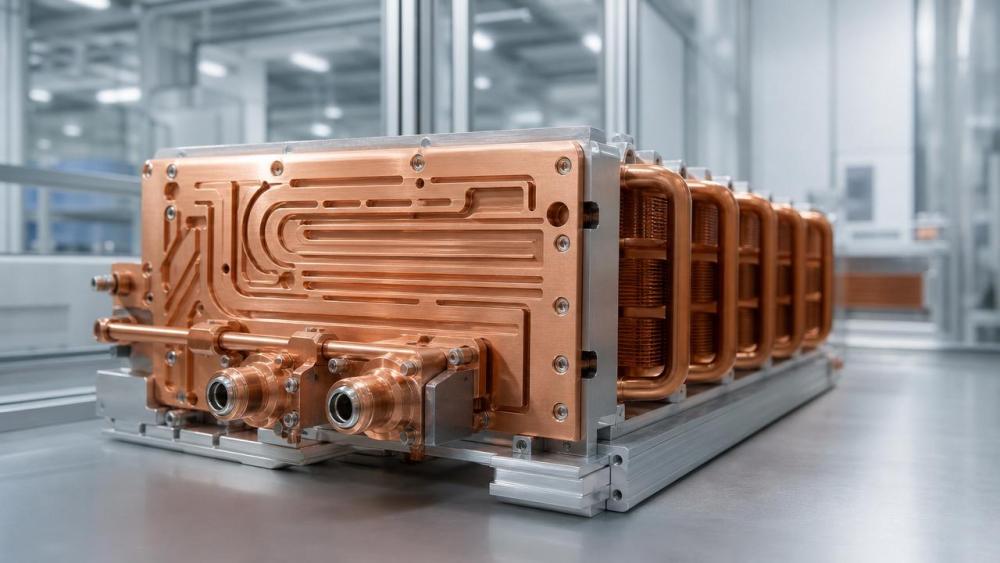
As of May 9, 2026, geopolitical tensions linked to the Iran conflict have driven a 8.2% weekly surge in LME copper prices, while the U.S. Dollar Index remains elevated. This combination has prompted Chinese manufacturers of liquid-cooled battery energy storage systems (BESS) to raise export quotations by 5–7%. Three Chinese thermal management module suppliers listed on the U.S. Department of Energy’s qualified vendor list have initiated copper hedging and aluminum substitution validation. This development warrants close attention from BESS system integrators, thermal component suppliers, raw material procurement teams, and export-focused OEMs — as it signals near-term cost volatility and supply chain adaptation pressure across the clean energy infrastructure value chain.
Event Overview
On May 9, 2026, publicly reported data confirmed that LME copper prices rose 8.2% week-on-week amid escalating regional tensions involving Iran. The U.S. Dollar Index remained at a sustained high level. In response, Chinese manufacturers of liquid-cooled BESS units adjusted export pricing upward by 5–7%. Separately, three China-based thermal management module suppliers included on the U.S. Department of Energy’s official white list announced they had commenced copper futures hedging and technical validation of aluminum-based alternatives for copper-intensive heat sink components.
Impact on Specific Industry Segments
Direct Export-Oriented BESS System Integrators
These firms face immediate margin compression due to higher quoted costs for copper-dependent liquid cooling modules — especially where contracts are priced in USD but settled against RMB or EUR. Pricing revisions may delay order confirmations or trigger renegotiation requests from overseas buyers.
Raw Material Procurement & Commodity Risk Management Teams
Copper price volatility directly affects landed cost calculations for heat sinks, cold plates, and busbar assemblies. With the USD remaining strong, imported copper cathodes and alloy ingots face compounded FX-related cost increases — raising urgency for formalized commodity risk frameworks beyond spot purchasing.
Thermal Component Manufacturers (Copper-Focused)
Firms specializing in copper-based cold plates, immersion manifolds, or direct-contact heat sinks encounter dual pressure: rising input costs and accelerated technical evaluation of aluminum substitutes. Validation timelines for alternative materials may impact product certification cycles, particularly for UL, IEC, or DOE-aligned projects.
Supply Chain & Logistics Service Providers Supporting BESS Exports
Freight forwarders and customs brokers supporting BESS shipments must anticipate tighter documentation requirements — especially if copper content triggers new origin tracing or metal sourcing disclosures under evolving U.S. or EU critical minerals reporting rules.
Key Focus Areas and Practical Responses
Monitor official updates on U.S. DOE qualification criteria and potential revision of thermal module eligibility thresholds
The inclusion of three Chinese suppliers on the DOE white list reflects current recognition of technical capability; however, any future update to qualification standards — particularly regarding domestic content, material traceability, or substitution allowances — could reshape tender eligibility for federal or federally funded BESS deployments.
Track LME copper basis differentials and USD/CNY forward points alongside physical delivery lead times
Current price spikes reflect speculative positioning more than immediate physical shortage. Firms should distinguish between short-term hedging needs (e.g., 1–3 month copper futures) and longer-term structural shifts — especially given ongoing aluminum substitution validation which targets 6–12 month implementation horizons.
Differentiate between policy signaling and operational readiness in material substitution programs
While aluminum validation is underway, no supplier has yet announced commercial-scale deployment of aluminum-based liquid cooling modules for BESS applications. Until thermal performance, corrosion resistance, and lifecycle testing results are published, copper remains the de facto standard for high-power density systems.
Pre-validate dual-material BOM options with key customers and certify alternative configurations where feasible
Proactive engagement with end customers on modular thermal design — e.g., offering copper and aluminum variants under the same system architecture — can reduce requalification delays and support smoother transition paths once substitution is operationally viable.
Editorial Perspective / Industry Observation
Observably, this episode functions less as an isolated price shock and more as a stress test for BESS supply chain resilience — particularly where thermal management relies heavily on geopolitically exposed base metals. Analysis shows that copper’s role extends beyond raw material cost: it anchors thermal performance benchmarks, safety certification pathways, and long-term reliability assumptions. The current response — hedging plus substitution validation — reflects industry awareness that single-commodity dependency poses strategic risk. However, it is more accurate to interpret these actions as preparatory measures rather than evidence of imminent material transition. From an industry perspective, the broader implication lies in the growing linkage between macro-geopolitical events and component-level engineering decisions — a trend likely to intensify as clean energy infrastructure scales globally.
Conclusion
At present, this development underscores how localized geopolitical developments can propagate rapidly into specific subsystem cost structures within complex energy hardware. It does not indicate a wholesale shift away from copper in BESS thermal management — nor does it signal immediate regulatory change. Rather, it highlights an emerging pattern: increasing sensitivity of downstream clean tech manufacturing to upstream commodity markets and their associated policy and logistics dependencies. For stakeholders, the most rational interpretation is that this is a timely reminder — not a disruption — to review material exposure, hedge coverage, and modular design flexibility in thermal subsystems.
Information Sources
Main sources: Public market data from LME (copper price movement), U.S. Department of Energy vendor list documentation, and verified corporate announcements from three named Chinese thermal management suppliers (as of May 9, 2026). Ongoing monitoring is advised for official updates on DOE qualification criteria and published results from aluminum substitution validation programs — neither of which has been formally released as of publication date.
Related News
- Vietnam Sets 2026 Standalone Storage Price Ceiling at VND 3,209.98/kWhNov 12, 2026Energy Storage Strategist
- NTPC Green Energy Tenders 10 GW/40 GWh Storage Systems and Grid-Forming PCSNov 10, 2026Energy Storage Strategist
- Australia’s NEM Battery Storage Reaches Record 20.17 GWhNov 09, 2026Energy Storage Strategist
- India Approves ₹145 Billion VGF Plan for 92 GWh of Energy StorageNov 07, 2026Energy Storage Strategist