
EU Carbon Labels Required for Energy Storage Exports
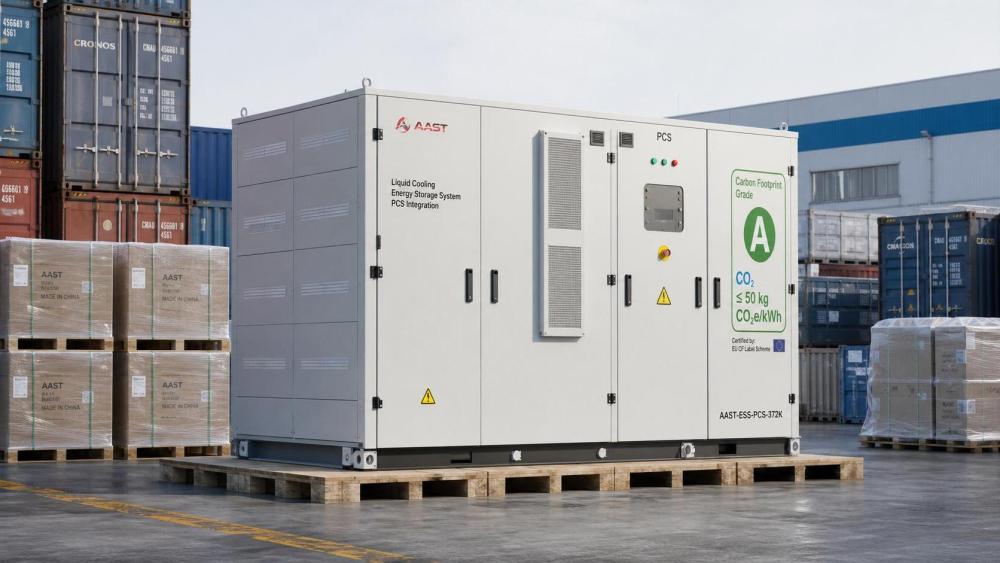
On August 18, 2026, the EU moves a compliance requirement from policy text into export reality: rechargeable industrial batteries above 2kWh must carry a carbon footprint performance class label under Regulation (EU) 2023/1542. For suppliers involved in UHV substation-related liquid-cooled BESS and PCS-integrated storage systems, the issue is not only labeling itself, but also how this requirement affects customs clearance, market access, and delivery planning for storage subsystems entering the European market.
What the new requirement formally covers
The confirmed change is tied to August 18, 2026. From that date, the EU Battery and Waste Battery Regulation (EU) 2023/1542 requires all rechargeable industrial batteries with capacity above 2kWh to display a carbon footprint performance class label.
The scope stated in the provided information includes liquid-cooled BESS used alongside UHV substations and PCS-integrated energy storage systems. The same input also indicates that this label, together with the digital battery passport that becomes mandatory in February 2027, forms a three-layer compliance threshold affecting the entry of these products into the EU market.
The direct business consequence identified in the source material is clear: Chinese UHV equipment EPC contractors delivering storage subsystems to the EU may face effects on customs clearance and market access if the relevant compliance conditions are not met.
Where the pressure appears along the delivery chain
For UHV project contractors shipping storage subsystems
From an industry perspective, this group is the closest to the immediate compliance impact because the rule is linked to actual EU entry and delivery. The main pressure point is no longer limited to equipment configuration; it extends to whether the exported storage subsystem carries the required label and whether shipment documentation aligns with EU-facing compliance expectations.
For battery and system integrators
Analysis shows that manufacturers and integrators involved in liquid-cooled BESS and PCS-integrated systems may be affected at the product definition and delivery preparation stages. If a system falls within the stated battery scope, labeling becomes part of the export-ready condition rather than a secondary packaging issue.
For supply chain and customs-facing service providers
Observably, the impact also reaches logistics, customs, and documentation support roles. Their focus is likely to shift toward whether product files, shipment materials, and compliance declarations are complete enough to support EU clearance for industrial battery-based storage systems.
For EU-side buyers and procurement teams
Procurement parties may not be the regulated exporter, but they are still exposed to delivery risk. What deserves closer attention is whether suppliers can demonstrate readiness for the August 2026 label requirement and the February 2027 digital battery passport obligation, especially where storage subsystems are part of larger UHV-related delivery packages.
What companies should track now
Separate confirmed obligations from implementation details
The confirmed point is the mandatory label requirement from August 18, 2026, for rechargeable industrial batteries above 2kWh. Companies should distinguish this established requirement from any operational assumptions about how review, acceptance, or enforcement may unfold in specific transactions.
Review which exported configurations fall within scope
For companies supplying UHV-related storage equipment, the practical issue is whether their liquid-cooled BESS or PCS-integrated systems are being delivered in a form captured by the stated battery scope. This matters for product classification, delivery packaging, and contract execution planning.
Prepare documentation and customer communication earlier
Analysis shows that labeling rules become more consequential when they connect directly to customs clearance and market access. That makes document readiness, supplier coordination, and buyer communication more important before shipment rather than after goods are ready to move.
Watch the connection to the 2027 digital battery passport
The provided information links the August 2026 label rule with a digital battery passport requirement that becomes mandatory in February 2027. Companies should therefore treat the current change not as an isolated label issue, but as part of a broader compliance sequence affecting future EU deliveries.
Why this looks like more than a packaging update
As an editorial observation, this development is better understood as a market-access compliance signal rather than a minor labeling adjustment. The reason is straightforward: the requirement is described as directly affecting customs clearance and entry into the EU market for storage subsystems tied to UHV equipment deliveries.
At the same time, it is not yet appropriate to overstate the outcome beyond the provided facts. The confirmed information establishes the rule, the timing, the product scope described in the input, and the immediate compliance relevance. Broader commercial effects still need to be observed through actual implementation and transaction practice.
How to read this development at this stage
It is more appropriate to understand this update as a near-term operational requirement with longer-term compliance implications. In the short term, it changes what eligible industrial battery-based storage products need before EU entry. In the medium term, it signals that labeling, product records, and digital compliance tools are becoming increasingly connected in cross-border energy storage trade.
For the industry, the main significance lies in execution discipline rather than headline value. Companies involved in exporting storage subsystems for UHV-related projects should read this as a concrete checkpoint that may influence shipment readiness, buyer coordination, and EU market access timing.
Basis of this article and points for continued verification
This article is based on the user-provided news title, event date, and event summary. No specific official source link was included in the input, so the precise official link still needs to be continuously verified.
For this type of development, source categories that are usually relevant include official regulatory notices, company announcements, industry association updates, authoritative media coverage, and standards-related documents. Further attention should focus on any clarified official wording, implementation guidance, and transaction-level compliance practice related to the carbon footprint performance class label and the February 2027 digital battery passport requirement.
Related News
- Vietnam Sets 2026 Standalone Storage Price Ceiling at VND 3,209.98/kWhNov 12, 2026Energy Storage Strategist
- NTPC Green Energy Tenders 10 GW/40 GWh Storage Systems and Grid-Forming PCSNov 10, 2026Energy Storage Strategist
- Australia’s NEM Battery Storage Reaches Record 20.17 GWhNov 09, 2026Energy Storage Strategist
- India Approves ₹145 Billion VGF Plan for 92 GWh of Energy StorageNov 07, 2026Energy Storage Strategist