
DOE Mandates UL 1973 Thermal Tests for Liquid BESS
Image Placement Plan
Place the single image after the opening lead to support the main topic visually, focusing on liquid-cooled battery energy storage systems, certification testing, or grid-scale energy storage compliance.
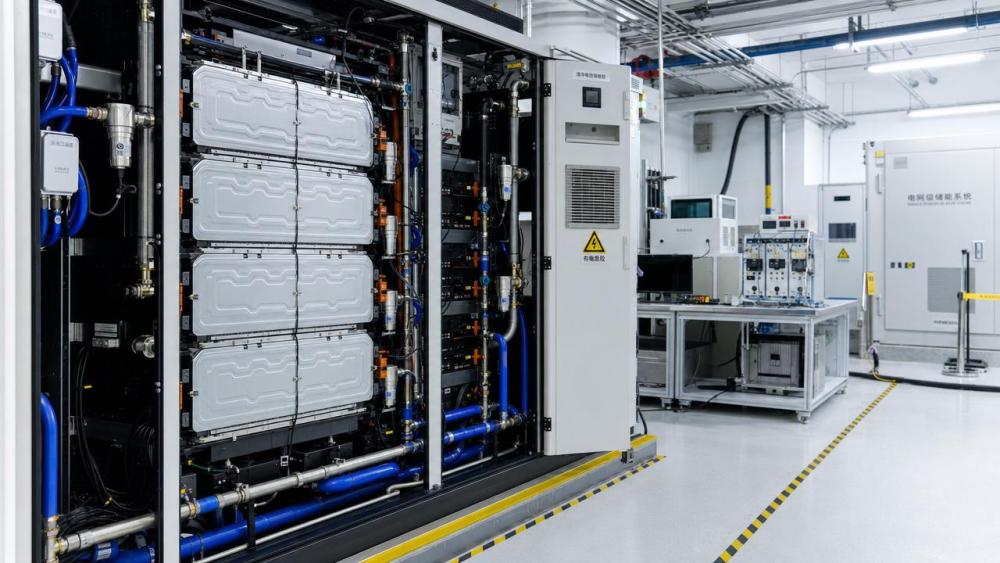
Effective June 1, 2026, the U.S. Department of Energy, in coordination with UL, began mandatory enforcement of the fourth edition of UL 1973 for imported liquid-cooled battery energy storage systems, creating new compliance implications for suppliers seeking access to U.S. grid-side procurement, California CPUC procurement eligibility, and auxiliary service participation under FERC 841.
What Has Now Become Mandatory
According to the provided event information, from June 1, 2026, DOE and UL formally began enforcing UL 1973 Fourth Edition requirements for all liquid-cooled battery energy storage systems imported into the United States.
The new mandatory validation scope includes three additional tests: thermal runaway propagation blocking, also referred to as TPS; immersion cooling compatibility; and cold plate-to-cell interface stress cycling. These requirements apply specifically to liquid-cooled BESS products entering the U.S. market.
The certification has also become a prerequisite for inclusion on the California CPUC procurement whitelist and for access to auxiliary services under FERC 841. Products without the required certification will not be eligible for grid-side tender participation or state-level subsidy catalog inclusion, based on the event summary provided.
How the Rule Change Reaches Across the Value Chain
Importers and direct trading companies
Direct trading companies are affected because the rule applies to imported liquid-cooled BESS products entering the United States. Their business exposure is concentrated in customs-facing documentation, customer qualification files, tender eligibility checks, and contract delivery commitments linked to U.S. grid-side projects.
They may need to pay closer attention to whether each imported product model has completed the required UL 1973 Fourth Edition validation scope, especially TPS, immersion cooling compatibility, and cold plate-to-cell interface stress cycling. Missing certification could affect bid participation, procurement whitelist access, and state-level subsidy catalog eligibility.
Raw material and component procurement teams
Procurement teams are affected because the added verification items relate directly to thermal runaway control, cooling-medium compatibility, and the mechanical interface between cold plates and cells. These requirements can influence the selection and qualification of cells, cooling plates, sealing materials, thermal interface materials, and other system components.
The key business impact is likely to appear in supplier qualification, incoming material documentation, technical specifications, and change-control procedures. From a compliance perspective, procurement teams may need to ensure that supplied materials and components support the certification evidence required for the full BESS system.
Manufacturers and system integrators
Manufacturers and system integrators face the most direct technical impact because the additional validation items relate to system safety design and operating reliability under liquid-cooling conditions. Their affected business links include product design review, test planning, engineering validation, technical file preparation, and production consistency control.
For liquid-cooled BESS manufacturers, particular attention may be needed around thermal runaway propagation mitigation, cooling architecture, cold plate-to-cell interface durability, and the compatibility of immersion cooling arrangements where applicable. Products intended for U.S. grid-side tenders may need certification readiness before commercial bidding activities proceed.
Supply chain service providers
Supply chain service providers, including logistics coordinators, certification support providers, inspection coordinators, and documentation service teams, are affected because certification status now influences market access for the covered products. Their work may involve verifying certificate availability, aligning shipment documentation, coordinating test reports, and supporting tender-related compliance files.
The operational focus may shift from basic delivery coordination to compliance traceability. Service providers may need to monitor whether product models, technical documents, and customer submission packages are consistent with the UL 1973 Fourth Edition requirements referenced in procurement and grid-side access processes.
Compliance Priorities Companies Should Review
Confirm certification coverage before tender submission
Companies planning to supply liquid-cooled BESS products to the U.S. market should verify whether the relevant product models have completed the UL 1973 Fourth Edition certification scope required under the new enforcement approach. This review should specifically include TPS, immersion cooling compatibility, and cold plate-to-cell interface stress cycling.
Align technical bids with CPUC and FERC 841 access needs
Because the certification is described as a prerequisite for California CPUC procurement whitelist access and auxiliary service entry under FERC 841, technical tender documents should clearly reflect certification status. Bid teams may need to ensure that qualification evidence, product descriptions, and compliance statements are consistent across procurement submissions.
Recheck supplier qualification and component traceability
For manufacturers and procurement organizations, supplier qualification should be reviewed against the added validation items. Components related to cooling, cell packaging, interface pressure, sealing, and thermal management may need stronger traceability so that test evidence and production records remain aligned.
Build delivery plans around testing and documentation readiness
The new certification requirement may affect export schedules, project delivery planning, and customer acceptance processes. Companies should review whether testing, technical documentation, and certification files can be completed before shipment, bidding, or inclusion in procurement eligibility lists.
Industry Reading: A Higher Safety Threshold for Liquid Cooling
From an industry perspective, this development is more appropriately understood as a tightening of safety-based market access requirements rather than a simple documentation update. The added verification items focus on failure containment, cooling compatibility, and mechanical interface durability, all of which are closely connected to the risk profile of liquid-cooled BESS products.
Analysis shows that certification readiness may become a more visible differentiator in U.S.-oriented energy storage supply chains. Manufacturers with mature safety validation systems, stable component control, and complete technical documentation may be better positioned to respond to procurement and grid access requirements. This is an analytical observation, not a confirmed market outcome.
What deserves closer attention is the link between certification and commercial eligibility. When a safety standard becomes connected with procurement whitelists, auxiliary service access, grid-side tenders, and subsidy catalog participation, compliance can influence not only product approval but also the timing and feasibility of commercial entry.
Measured Outlook
The mandatory enforcement of UL 1973 Fourth Edition requirements for imported liquid-cooled BESS products marks a significant compliance shift for companies targeting the U.S. grid-side energy storage market. The rule places greater emphasis on thermal runaway control, liquid-cooling compatibility, and interface durability validation.
A balanced conclusion is that the change may raise preparation requirements for exporters, manufacturers, and supply chain partners, while also reinforcing safety expectations for grid-scale energy storage procurement. Its full commercial effect will depend on how certification execution, tender documents, and procurement reviews evolve after implementation.
Source Note and Ongoing Watch Points
This article is based on the provided news title, event date, and event summary. The information used includes the June 1, 2026 implementation date, the role of DOE and UL, the UL 1973 Fourth Edition requirement, the three added validation items, and the stated connection with California CPUC procurement eligibility and FERC 841 auxiliary service access.
Relevant official or authoritative source types for this kind of event may include DOE communications, UL standard and certification materials, CPUC procurement documentation, FERC 841-related market access materials, and tender documents issued by grid-side procurement bodies. Specific official source links were not provided in the input and should be verified continuously.
Further monitoring should focus on detailed enforcement guidance, certification interpretation, testing documentation requirements, changes in tender specifications, procurement whitelist procedures, and feedback from manufacturers, importers, and project developers.
Related News
- Vietnam Sets 2026 Standalone Storage Price Ceiling at VND 3,209.98/kWhNov 12, 2026Energy Storage Strategist
- NTPC Green Energy Tenders 10 GW/40 GWh Storage Systems and Grid-Forming PCSNov 10, 2026Energy Storage Strategist
- Australia’s NEM Battery Storage Reaches Record 20.17 GWhNov 09, 2026Energy Storage Strategist
- India Approves ₹145 Billion VGF Plan for 92 GWh of Energy StorageNov 07, 2026Energy Storage Strategist