
China Takes 68% of Q1 Liquid-Cooled BESS Awards
Between 2026-04-01 and 2026-06-05, the latest market signal in utility-scale energy storage was not only about order growth, but also about how certification, protection performance, and safety-response requirements are increasingly shaping overseas project awards. Based on BNEF’s Q2 2026 report, Chinese contractors accounted for a sharply higher share of newly signed global large-scale liquid-cooling BESS contracts in Q1 2026. For manufacturers, exporters, project suppliers, certification-related service providers, and buyers, this is worth close attention because it suggests that delivery capability is being judged through a more integrated compliance-and-execution lens rather than through product supply alone.
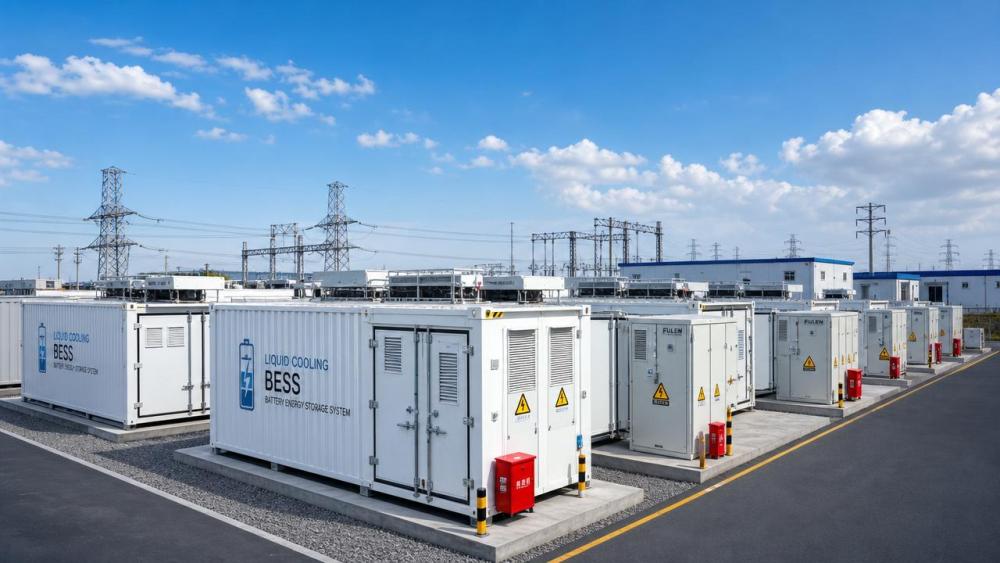
What the reported Q1 contract data confirms
According to the event summary provided, BNEF’s Q2 2026 report states that in the first quarter of 2026, Chinese companies accounted for 68% of newly signed global large-scale Liquid Cooling BESS contracts, up from 51% in the same period of 2025.
The reported project destinations were Spain, Australia, Saudi Arabia, and Texas in the United States.
The summary also identifies the main reason for the order increase as the formation of a delivery closed loop by Chinese suppliers around three elements: IP65 protection, millisecond-level response to thermal runaway, and UL 9540A full-system certification.
Why compliance capability is becoming part of market access
For storage system manufacturers and export suppliers
From an industry perspective, the reported change matters because it links contract competitiveness to verifiable safety and certification readiness. For system manufacturers and export-facing suppliers, the impact is likely to appear first in technical bidding, customer due diligence, certification file preparation, and delivery commitments. What deserves closer attention is whether product claims, test evidence, and system-level documentation are aligned closely enough to support overseas procurement review.
For buyers and project developers
For buyers, EPC-facing procurement teams, and project owners, the reported pattern indicates that supplier selection may increasingly favor vendors that can present a clearer package of enclosure protection, thermal safety response, and system-level certification support. The practical effect may fall on pre-qualification review, tender specification alignment, acceptance conditions, and responsibility allocation during delivery.
For testing, certification, and compliance service providers
Testing bodies, certification-related firms, and technical advisory providers may also be affected because the summary points to certification not as a peripheral requirement, but as part of the award logic. In practice, this can raise the importance of test reports, system-level validation materials, and consistency between technical documents and contractual commitments.
For after-sales and supply-chain execution teams
Supply-chain service providers and after-sales operators should also note that a delivery closed loop implies more than shipment readiness. Observably, project execution may place greater weight on traceable quality records, response procedures linked to safety performance, and the ability to support customers after commissioning where certification-linked expectations continue into operation and maintenance.
What companies should review now
Check whether certification is presented at the full-system level
Analysis shows that one of the clearest practical issues is not simply whether a storage product has supporting documents, but whether certification and test materials are organized around the full system in a way that matches buyer review logic. Companies involved in export bids should pay close attention to how UL 9540A-related materials are referenced, described, and submitted in bid files and technical packages.
Reassess how safety performance is translated into tender documents
The event summary highlights millisecond-level thermal runaway response as part of the competitive advantage. That makes it important for suppliers to examine whether their technical documentation, test expressions, and contractual wording describe safety-response capability consistently. Where execution details are not yet disclosed in the input, this should be treated as an area for careful follow-up rather than as a settled market standard.
Review enclosure protection and delivery consistency
Because IP65 protection is specifically cited, exporters and integrators should review whether protection-grade claims, inspection materials, product configuration records, and shipment documents remain consistent across procurement, factory acceptance, and overseas delivery stages. This is especially relevant where project awards depend on confidence in execution rather than on price alone.
Track market-specific procurement language and customer review focus
Since the reported contracts were concentrated in Spain, Australia, Saudi Arabia, and Texas, companies should closely monitor how buyers in these markets frame technical specifications, qualification thresholds, and supporting-document expectations. The input does not provide official procurement language or regulatory text, so any response should focus on monitoring and alignment rather than assuming a uniform rule set across all destinations.
How this signal should be read at this stage
It is more appropriate to understand this development as an execution signal tied to standards, certification, and delivery readiness, rather than as proof of a new single rule issued across all markets. Analysis shows that the reported gain in contract share reflects how overseas demand may be rewarding suppliers that can combine product protection, rapid safety response, and system certification into one deliverable package.
At the same time, this should not be overstated as a universal or final shift in market rules. What still needs observation is how buyers, certification reviewers, and tender documents continue to define acceptable evidence, how consistently these requirements are enforced, and whether similar selection logic expands beyond the markets mentioned in the input.
What this means for near-term market execution
The immediate industry significance lies less in headline market share and more in the apparent elevation of compliance-backed deliverability as a commercial differentiator. For companies across the storage export chain, the key takeaway is that technical performance, certification structure, and project delivery evidence may be converging into a single procurement requirement.
At present, this is best understood as a strong market indicator of where contract evaluation is moving, not as a complete or fully standardized global rule change. A rational response is to strengthen document readiness, certification alignment, and delivery traceability while continuing to watch for further confirmation in procurement practice and compliance interpretation.
Basis of this article and points requiring further verification
This article is generated based on the user-provided news title, event time range, and event summary. The core factual basis is the reported BNEF Q2 2026 statement on Q1 2026 global large-scale liquid-cooling BESS contract share and the cited factors of IP65 protection, millisecond-level thermal runaway response, and UL 9540A full-system certification.
For developments of this type, relevant source categories typically include official announcements, regulator publications, customs or trade authority information, industry association releases, standards organization documents, tender materials, and reporting from established industry media. No specific official source link was provided in the input, so the underlying official documentation and any market-specific procurement texts still require ongoing verification.
Further observation should focus on later certification interpretation, procurement document changes, compliance review practice, buyer qualification language, industry feedback, and how companies implement these requirements in actual delivery.
Related News
- Vietnam Sets 2026 Standalone Storage Price Ceiling at VND 3,209.98/kWhNov 12, 2026Energy Storage Strategist
- NTPC Green Energy Tenders 10 GW/40 GWh Storage Systems and Grid-Forming PCSNov 10, 2026Energy Storage Strategist
- Australia’s NEM Battery Storage Reaches Record 20.17 GWhNov 09, 2026Energy Storage Strategist
- India Approves ₹145 Billion VGF Plan for 92 GWh of Energy StorageNov 07, 2026Energy Storage Strategist