
Brazil ANATEL Introduces CTRI Test for Liquid-Cooled BESS
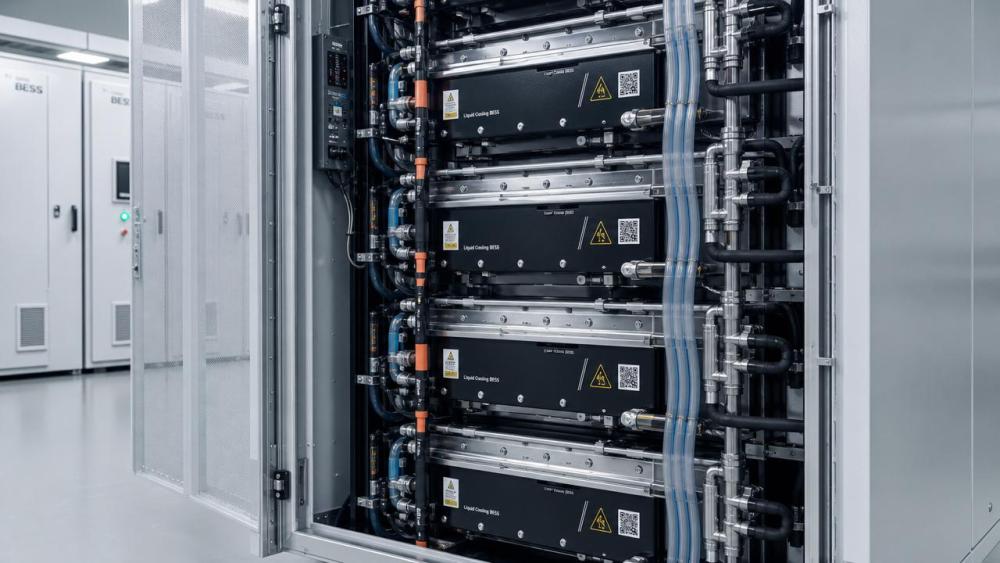
On May 17, 2026, the Brazilian National Telecommunications Agency (ANATEL) issued Resolution No. 589, introducing a new mandatory safety requirement for liquid-cooled battery energy storage systems (BESS) deployed or sold in Brazil — the Cascading Thermal Runaway Interruption (CTRI) test. This regulatory shift directly impacts global BESS suppliers, particularly Chinese manufacturers targeting the rapidly expanding solar-plus-storage market in Brazil, where thermal safety compliance now governs project timelines, certification pathways, and system architecture decisions.
Event Overview
On May 17, 2026, ANATEL published Resolution No. 589, amending its technical requirements for telecommunications infrastructure power systems. The amendment mandates that all liquid-cooled BESS intended for use in telecom base stations or grid-connected distributed energy applications in Brazil must pass the newly defined CTRI test. The test requires that, following intentional thermal runaway initiation in one cell, adjacent modules must not exceed a temperature rise of ≤15°C within five minutes. CATL and BYD have submitted initial verification reports to ANATEL; no public confirmation of approval status has been issued.
Industries Affected
Direct Trade Enterprises: Exporters and system integrators selling liquid-cooled BESS into Brazil face extended lead times and increased pre-market validation costs. Compliance is now a hard gate for customs clearance and project commissioning — delays may trigger contractual penalties in utility-scale or telecom EPC contracts.
Raw Material Procurement Enterprises: Suppliers of thermal interface materials (TIMs), fire-retardant encapsulants, and low-thermal-conductivity module barriers are seeing renewed technical inquiries. However, procurement teams must now align material specifications with CTRI’s 5-minute dynamic thermal propagation threshold — a departure from static UL9540A or IEC 62933-5-2 benchmarks.
Manufacturing Enterprises: BESS pack and system OEMs must revise thermal management control logic, add redundant temperature monitoring per module boundary, and potentially redesign cold plate layouts to suppress lateral heat conduction. These changes affect bill-of-materials (BOM) cost, production line tooling, and firmware validation cycles.
Supply Chain Service Providers: Certification bodies accredited by ANATEL (e.g., INMETRO-designated labs) are prioritizing CTRI test capacity expansion. Logistics providers handling hazardous goods (e.g., lithium-ion modules) must now verify CTRI-compliant packaging documentation — a new layer in shipment audit protocols.
Key Focus Areas and Recommended Actions
Validate CTRI test protocol alignment early
ANATEL’s CTRI test defines specific failure initiation methods (e.g., external heating vs. overcharge), sensor placement rules, and ambient conditioning. Enterprises should cross-check their internal test procedures against Annex II of Resolution No. 589 before engaging third-party labs — misalignment risks retesting and >8-week delays.
Review existing product certifications for scope limitations
Many liquid-cooled BESS currently hold INMETRO certification under older ANATEL frameworks (e.g., Resolution No. 526). Those certifications do not automatically cover CTRI. Firms must assess whether grandfathering applies or if full re-certification is required — especially for products already in pipeline shipments.
Engage with ANATEL-accredited labs on test scheduling
Only three labs in Latin America currently hold provisional CTRI testing accreditation. Lead time for first-time test slots exceeds 12 weeks. Companies should secure lab reservations concurrently with internal design freeze — not after prototype completion.
Update technical documentation for end customers
Brazilian telecom operators (e.g., Claro, TIM) and renewable developers are beginning to require CTRI compliance statements in bid submissions. Marketing and technical sales teams must prepare updated datasheets, safety white papers, and declaration of conformity templates aligned with Resolution No. 589 wording.
Editorial Perspective / Industry Observation
Observably, ANATEL’s move signals a broader regional pivot toward performance-based, scenario-driven safety regulation — distinct from prescriptive design standards. Unlike EU’s EN 50620 or U.S. NFPA 855, which emphasize passive containment and venting, CTRI focuses on active thermal decoupling between modules. Analysis shows this reflects Brazil’s unique operating context: high ambient temperatures, limited service access in remote telecom sites, and growing reliance on second-life or LFP-dominant cells with lower intrinsic thermal stability margins. From an industry perspective, this is less about raising the bar uniformly and more about adapting safety logic to local risk profiles.
Current developments suggest that CTRI may become a de facto benchmark beyond telecom applications — early drafts of Brazil’s upcoming grid-code update (Prodist Revision 2027) reference similar cascade-suppression logic for distributed storage interconnection. That said, it remains uncertain whether CTRI will be harmonized with IEC TS 62933-5-3 (under development) or evolve as a nationally distinct protocol.
Conclusion
The introduction of the CTRI test marks a structural inflection point in how thermal safety is regulated for liquid-cooled BESS in emerging markets. It shifts emphasis from component-level qualification to system-level dynamic behavior under fault propagation — a change that rewards integrated thermal-electrical co-design and penalizes modular ‘plug-and-play’ architectures. For international suppliers, this is better understood as a localized adaptation requirement than a universal safety upgrade. Success hinges less on technical capability alone and more on regulatory agility: mapping test requirements to product roadmaps, coordinating across certification ecosystems, and communicating compliance meaningfully to downstream stakeholders.
Source Attribution
Official text: ANATEL Resolution No. 589, published May 17, 2026, available at anatel.gov.br/legislacao/resolucoes/2026/resolucao-no-589.
Technical annexes, including CTRI test methodology and acceptance criteria, are published as Annex II.
Ongoing items for observation: (1) ANATEL’s official list of accredited CTRI testing laboratories; (2) potential inclusion of CTRI in Brazil’s upcoming Prodist revision for distributed generation interconnection; (3) alignment status with IEC TS 62933-5-3 draft standard.
Related News
- Vietnam Sets 2026 Standalone Storage Price Ceiling at VND 3,209.98/kWhNov 12, 2026Energy Storage Strategist
- NTPC Green Energy Tenders 10 GW/40 GWh Storage Systems and Grid-Forming PCSNov 10, 2026Energy Storage Strategist
- Australia’s NEM Battery Storage Reaches Record 20.17 GWhNov 09, 2026Energy Storage Strategist
- India Approves ₹145 Billion VGF Plan for 92 GWh of Energy StorageNov 07, 2026Energy Storage Strategist